HORMONES 2010, 9(1):7-8
DOI: 10.1007/BF03401275
Address for correspondence:
C. Dacou-Voutetakis, First Department of Pediatrics, Athens University School of Medicine, Fax: +30 210 7796312, e-mail: adacou@med.uoa.gr
Key words: Endocrine disruptors, Epigenetic influences
“Human health cannot be treated separately from the natural environment.”
Hippocrates
The realization that the environment exerts a favorable or unfavorable effect on the human organism is not new. In the remote past, not only physicians but philosophers (e.g. Plato, Aristotle) as well wrote about the adverse effects of a maltreated environment, while Theophrastus (a student of Plato and Aristotle) is considered the father of ecology.
The increasing awareness of the scientific community to global environmental changes and their direct relation to human health has been reflected in the two pertinent forums of the American Endocrine Society and the various recent publications on the subject.1-4
The endocrine system has emerged as one of the main targets of an obnoxious environment. Thus, environmental disrupting chemicals (endocrine disruptors) may affect the function of the endocrine system and consequently somatic growth, fertility, and morphogenesis. Some scientists support the view that endocrine disruptors may also act as “obesogens”3 thus contributing to the obesity epidemic. Moreover, it should be borne in mind that, besides environmental chemicals, an adverse social environment may also have deleterious effects on the developing organism.
In our day and age, it is essential for scientists and the public to be made fully aware of the deleterious chemicals that are present in items used every day by every one of us and, most importantly, by children and pregnant women.
The environmental threat appears all the more serious when it is realized that the effects are not only exerted on the organism in the immediate present but it can also be transmitted to subsequent generations. It is well known that the phenotype is the result of complex interactions between genome and epigenetic effects of current, past and ancestral environmental influences. An impressive example of an epigenetic effect most likely representing adaptive changes to ensure survival in an unfavorable environment (as is the case in an environment with low food availability) are the so-called dwarf elephant and hippopotamus, skeletons of which have been found on the island of Crete.5 It is said that these animals reached the island hundreds of thousands years ago in an era of low food availability. We may thus assume that through epigenetic influences, the subsequent generations survived through size reduction (Figure 1).
The plasticity of the epigenetic changes, in other words the potential to reverse long-term effects through proper and timely intervention, remains a very important issue.
The considerable body of knowledge1-4 accumulated in the various scientific fields motivated the editorial board of the journal “HORMONES” to organize a symposium for October 2009 in which experts in the field delivered lectures on the various aspects of endocrine disruptors. A number of these lectures appear in the present and the next issue of the journal “HORMONES” after going through the regular reviewing process of the journal.
Such articles written by distinguished researchers in the field will help to further increase the awareness of scientists, and especially those treating pregnant women, children and adolescents, knowing that fetal, childhood, and adolescent periods constitute the so-called “windows” of sensitivity to environmental influences.
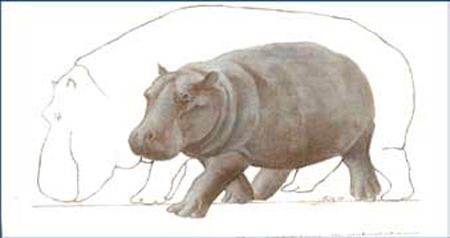
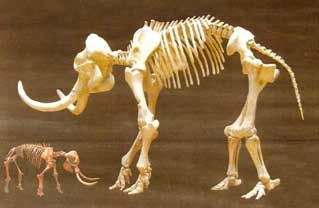
Figure 1. Dwarf elephant and hippopotamus, skeletons of which have been found on the island of Crete, Greece.5
Last but not least, we shall not forget to stress the fact that the environment can certainly act not only negatively but positively as well. Nature’s beauty and smiling friends have unsurpassed positive effects on the organism increasing longevity, quality of life, and productivity.6
Our efforts for environmental improvements should be wide-ranging, encompassing the many aspects of environmental influences. In such endeavors, knowledge constitutes a powerful instrument that must be transmitted to scientists, most particularly to those caring for children, as well as the public and, vitally, to decision makers.
REFERENCES
1. Diamanti-Kandarakis E, Bourguignon JP, Giudice LC, et al, 2009 Endocrine-disrupting chemicals: an Endocrine Society scientific statement. Endocr Rev 30: 293-342.
2. Jirtle RL, Skinner MK, 2007 Environmental epigenomic and disease susceptibility. Nature Rev Genet 8: 253-262.
3. Grun F, Blumberg B, 2005 Environmental obesogens: organotins and endocrine disruption via nuclear receptor signaling. Endocrinology 147: Suppl: 50-55.
4. Anway MD, Cupp AS, Uzumcu M, Skinner MK, 2005 Epigenetic transgenerational actions of endocrine disruptors and male fertility. Science 308: 1466-1469.
5. Dermitzakis MD, De Vos J, 1987 Faunal succession and the evolution of Mammals in Crete during the Pleistocene. N Jb Geol Palaont Abh 173: 377-408.
6. Christakis NA, Fowler JH, 2007 The Spread of Obesity in a Social Network over 32 Years NEJM 357: 370-379.