HORMONES 2013, 12(1): 7–8
DOI: 10.1007/BF03401280
Leonidas H. Duntas
Professor of Endocrinology, Evgenidion Hospital, Unit of Endocrinology, Diabetes and Metabolism, University of Athens Medical School
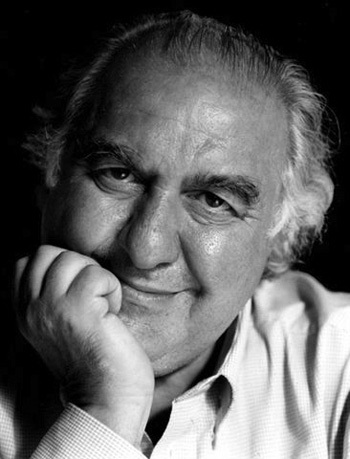 Internationally renowned Endocrinologist, Professor Aldo Pinchera, an exceptional personality and brilliant scientist, passed away on 11 October, 2012. The news of his passing was received with deep sorrow and a profound sense of loss, not only by his family but also by his countless friends, colleagues, patients and the entire world thyroid community. His death marks the end of an era of thyroid history. This was a period characterized by significant achievements in research and the noteworthy development and organization of the European Thyroid Association (ETA), of which Aldo Pinchera was, since the late 70’s, an enthusiastic member, and ardent promoter as well as serving a term of Presidency.
Professor Pinchera studied Medicine in Rome and became Professor of Endocrinology at the University of Pisa, where from 1981 till his retirement in 2009 he headed the Department of Endocrinology while also serving for several years as Dean. It was thanks to his efforts that the Department was accorded the title of WHO Collaborating Center for the Study and Treatment of Thyroid Disease and other Endocrine and Metabolic Disorders. Over the years he visited and inspiringly lectured to large numbers of the foremost thyroid research groups including notably John Stanbury’s group at Harvard Medical School. Among the many prizes and honors which he was awarded, special mention must be made of some of the most important, namely the famous Paul Starr Award of the American Thyroid Association, the Henning Prize of the ETA and, as if crowning his extraordinary career, the Lissitzky Career Award conferred by the ETA. This latter was presented to him at the last annual ETA meeting, September 2012, in Pisa, his hometown, exactly 31 years after the first ETA meeting in Tuscany—a very special award bestowed by “his” European Thyroid Association that gave him immense satisfaction and joy, just four weeks before his unexpected death.
Aldo Pinchera was not only a highly gifted and passionate thyroidologist but also a true friend and a precious mentor for the many scholars who, from around the world, regularly visited his Department in Pisa. Endowed with exceptional intelligence, resourcefulness and political skills, he was able to bring about vital changes in Italy’s Health Policy while also establishing throughout his homeland a powerful network of Thyroid “nests” headed by his former associates. This accomplishment formed the groundwork for the remarkable flourishing of Thyroidology in Italy over the last 20 years.
Professor Pinchera was President of the Italian Endocrine Society and of the European Thyroid Association and was also a member or honorary member of numerous scientific societies throughout the world. He was the founder and for many years Editor-in-Chief of the Journal of Endocrinological Investigations, while he additionally served as a member of the Editorial Board of several high-ranking Endocrine Journals. As author or co-author, he published more than 670 scientific articles and many chapters in Endocrine and Thyroid textbooks.
Though his scientific contributions covered the entire spectrum of thyroid disease, his main interest was centered on thyroid autoimmunity and thyroid cancer. Following the Chernobyl nuclear accident, he coordinated the clinical studies into childhood thyroid cancer for the European Union. His last project was “Pisa, a city that walks”, an ambitious project whose aim was to combat obesity while promoting Pisa as a paradigm of a ‘walking city’ in Europe.
I first met Professor Aldo Pinchera in 1983 when he was invited by the Hellenic Endocrine Society to the Annual Meeting in Athens, during which period I was training in Germany. He often told me how much he loved Greece, and particularly the island of Cephalonia, the lovely locality featured in “Captain Corelli’s Mandolin”, a book he most keenly recommended to me. At the many ETA and ATA meetings over the years he was always a focus of intense interest on account of his amiable and extroverted personality, his extremely well-informed observations, his expert and engaging talks. I greatly admired his subtle sense of humor and his profound knowledge of both history and social concerns, but above all his zealous dedication to the fight against thyroid disease. A man of relentless resolve, this quality was demonstrated recently by his attendance at the ATA Annual Meeting in Quebec in late September, 2012: though physically and emotionally drained by the eventful ETA meeting a few days before in Pisa, he was determined not to miss the ATA Meeting, he who was always present.
He is survived by his devoted lifetime companion, his wife Chicchi, una vera Signora, and two daughters, to all of whom my most earnest sympathy is extended.
While deeply mourning the passing of this great man, we take courage in the knowledge that his enormous achievements and amazing example will live on long after him.
Άξιος!
Professor of Endocrinology, Evgenidion Hospital,
Unit of Endocrinology,
Diabetes and Metabolism,
University of Athens
Medical School